

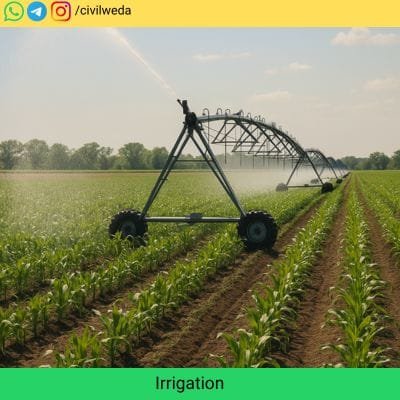
The advantages and disadvantages of irrigation are very important to understand in agriculture because irrigation directly affects crop yield, soil fertility, and sustainable farming. In simple words, irrigation helps farmers by providing water during dry seasons, but it also has some drawbacks, like waterlogging and soil salinity.
Irrigation is an essential practice in agriculture, especially in regions where rainfall is uncertain. It provides water to crops during dry seasons, improves productivity, and supports multiple cropping. However, along with its benefits, irrigation also creates some challenges. Therefore, it is important to understand the advantages and disadvantages of irrigation in order to use water resources efficiently and maintain soil health. In this article, we will discuss the major advantages and disadvantages of irrigation in agriculture with simple explanations.
Definition of irrigation:
Irrigation may be defined as the process of artificial application of water to the soil or land for the growth of crops. In other words, we can say that irrigation is a science of planning and designing a water supply system for watering the agricultural land to protect the crops from the adverse effects of the weather. With the help of irrigation, the yield of crops is increased.
Advantages and disadvantages of irrigation:
According to FAO AQUASTAT, areas equipped for irrigation increased globally in recent decades. Irrigation and Drainage Overview shows detailed data
Now. Let’s start exploring the advantages and disadvantages of irrigation step by step
Advantages of irrigation
First of all, we will discuss about Advantages of Irrigation. There are the following advantages of irrigation
Increase in crop yield
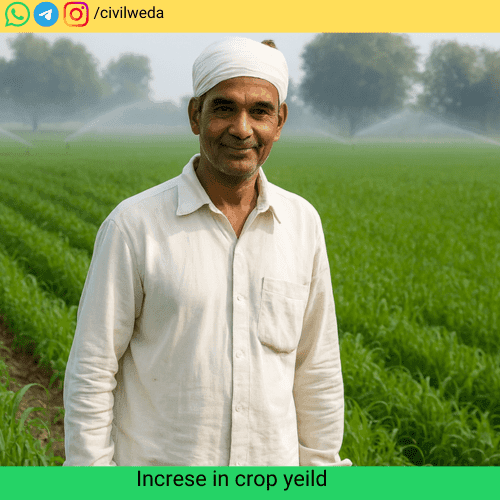
Among the advantages and disadvantages of Irrigation, one important advantage is that it increases crop yield. In many places, rainfall is not enough for farming, and crops often suffer due to a lack of water. Irrigation solves this problem by giving a regular supply of water to the fields. This helps plants grow properly, reduces the chance of crop failure, and improves soil moisture.
As a result, irrigated land produces more crops compared to land that depends only on rain. In simple words, irrigation makes farming more reliable and gives farmers more food from the same land. An increase in crop yield occurs on account of a good irrigation system, leading to an increase in food production. When an irrigation system is strong for a country, the food production of that country is very high.
Protection against famines
An important benefit under the Advantage and Disadvantage of Irrigation is protection against famines. In many regions, rainfall is uncertain, and droughts often lead to crop failure. Irrigation provides a reliable supply of water to crops during dry seasons, which reduces the risk of food shortages. With proper irrigation, farmers can continue cultivation even in years of low rainfall. This ensures food security for the population and protects the economy from the negative effects of famine. In short, irrigation acts as a safeguard against hunger and supports sustainable agriculture.
Revenue generation
One of the positive points under the Advantages and Disadvantages of Irrigation is revenue generation. When irrigation facilities are available, farmers can grow more crops and earn extra income by selling the surplus in the market. Irrigation canals are sometimes also used for activities like fisheries and water transport, which further add to revenue. In addition, the government earns income from irrigation projects through water taxes and canal charges. In this way, irrigation not only helps farmers but also supports the overall economy of the country.
Avoidance of mixed cropping
Mixed cropping means showing two or more crops together in the same field when weather conditions are not favorable for a particular type of crop. The need for mixed cropping is eliminated if we have a good irrigation facility.
Navigation
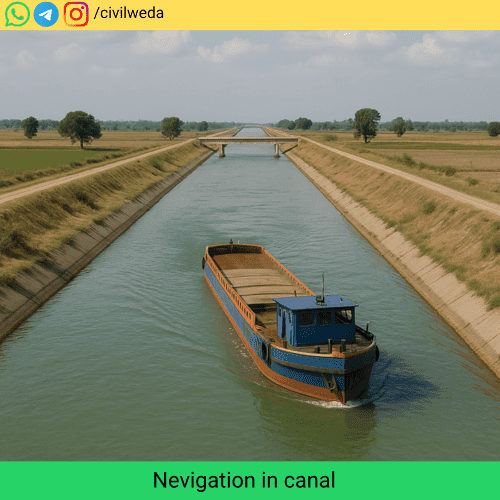
Another important point under the Advantages and Disadvantages of Irrigation is navigation. In some irrigation projects, canals are not only used for supplying water to the fields but also for transporting goods and people. These canals work like waterways and provide a cheap and safe mode of transport. Farmers and traders can easily carry agricultural products from one place to another, which helps in saving money and time.
In this way, irrigation canals improve communication and trade in rural areas, along with providing water for crops. Irrigation canals may be used for Inland navigation. Proper construction following Indian irrigation standards ensures durability and reduces wastage. Refer to Indian Standards Related to Irrigation for specifications used in India.
Hydroelectric power generation
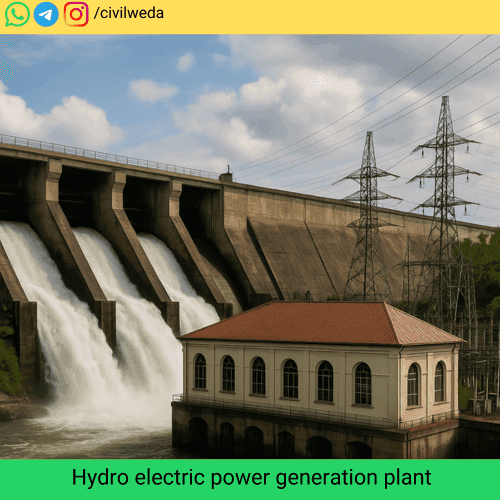
One of the notable benefits under the Advantages and Disadvantages of irrigation is the generation of hydroelectric power. Large irrigation projects often include dams and reservoirs that store water. This stored water can be used to run turbines and produce electricity. Hydroelectric power is clean, renewable, and very useful for rural as well as urban areas. Along with providing water for agriculture, these projects also supply energy for industries, households, and irrigation pumps. In this way, irrigation projects not only support farming but also contribute to the overall development of the country.
Generation of employment opportunities
During the construction of irrigation works like Canal headworks, weirs, or barrages, and overhead irrigation works, employment opportunities are generated.
Disadvantages of irrigation
Now we will discuss about Disadvantages of Irrigation. There are the following disadvantages of irrigation
Waterlogging in irrigation
Under the advantages and disadvantages of Irrigation, waterlogging is a major problem. Excess irrigation fills the soil with water, reducing air for roots. This weakens plants, lowers fertility, and may cause crop failure. Proper drainage and controlled irrigation are needed to prevent this disadvantage. Explore a detailed article on waterlogging.
Wastage of irrigation water
Under the advantages and disadvantages of Irrigation, wastage of water is a common drawback. In traditional methods, a large amount of irrigation water is lost through seepage, evaporation, and overuse. This unnecessary wastage reduces water availability and creates scarcity for other important purposes. An abundant supply of irrigation water tempts the cultivators to use more than the required amount of water.
Formation of marshy land
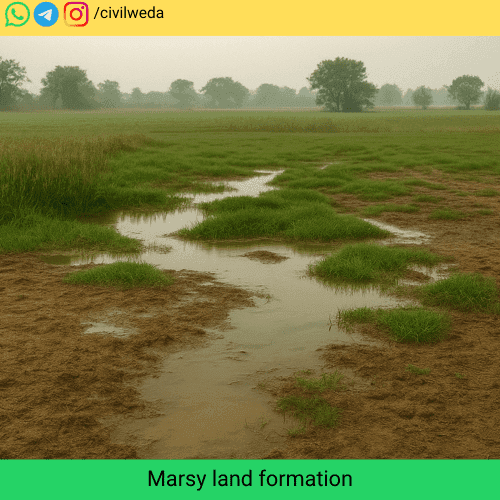
Among the advantages and disadvantages of Irrigation, one drawback is the formation of marshy land. When excess water remains on the surface, it makes the soil wet and swampy. Such land becomes unfit for cultivation and also increases the growth of weeds and harmful insects.
Dampness in the weather
Under the Advantages and Disadvantages of Irrigation, dampness in the weather is another drawback. Continuous irrigation increases moisture in the surrounding air. This damp condition may lead to an unhealthy climate, promote mosquito breeding, and increase diseases like malaria. Thus, over-irrigation can also affect human health and living conditions.
Loss of valuable lands
In various cases, valuable land gets submerged when storage reservoirs are formed on account of the construction of a weir or barrage, overhead irrigation, dams, or canals, etc.
Read more Civil Engg. Topics
- Advantages and Disadvantages of Sprinkler Irrigation
- Drip Irrigation
- Waterlogging
- Viscosity
- Surface Tension
Conclusion:
The advantages and disadvantages of Irrigation are very important to know in agriculture. Irrigation is helpful because it gives water to crops when rain is less, increases crop yield, and helps farmers grow more than one crop in a year. At the same time, too much irrigation can create problems like waterlogging, soil salinity, and wastage of water.
To get more benefits and reduce the disadvantages, modern methods like drip and sprinkler irrigation should be used. In simple words, irrigation is good when it is managed properly. Thus, understanding the advantages and disadvantages of irrigation helps farmers plan better and use water efficiently.
At Civil Weda, we always try to explain such topics in easy language so that students can prepare well for exams, and farmers can also understand the practical uses
FAQ on Advantages and Disadvantages of Irrigation
1. What are the main advantages of irrigation?
Irrigation increases crop yield, provides water during dry seasons, improves soil fertility, and helps farmers grow multiple crops in a year.
2. What are the disadvantages of irrigation?
Excess irrigation may cause waterlogging, soil salinity, increased cost of cultivation, and wastage of water resources.
3. Which method of irrigation is most efficient?
Drip irrigation is considered the most efficient method as it saves water, reduces evaporation losses, and provides moisture directly to the plant roots.
4. How can the disadvantages of irrigation be reduced?
By adopting modern methods like drip and sprinkler irrigation, proper drainage systems, and balanced use of water, the negative effects of irrigation can be minimized.
5. Why is irrigation important in agriculture?
Irrigation ensures a regular water supply to crops, protects them from drought, increases food production, and supports sustainable agriculture.
Thank You for Reading! 🙏
We hope this article helped you clearly understand the advantages and disadvantages of Irrigation ( click here to read 👉 drip irrigation ) in civil engineering. If you found this complete article useful, please share it with your friends and university students. For more informative posts on civil engineering topics, stay connected with Civil Weda. 🚀

