
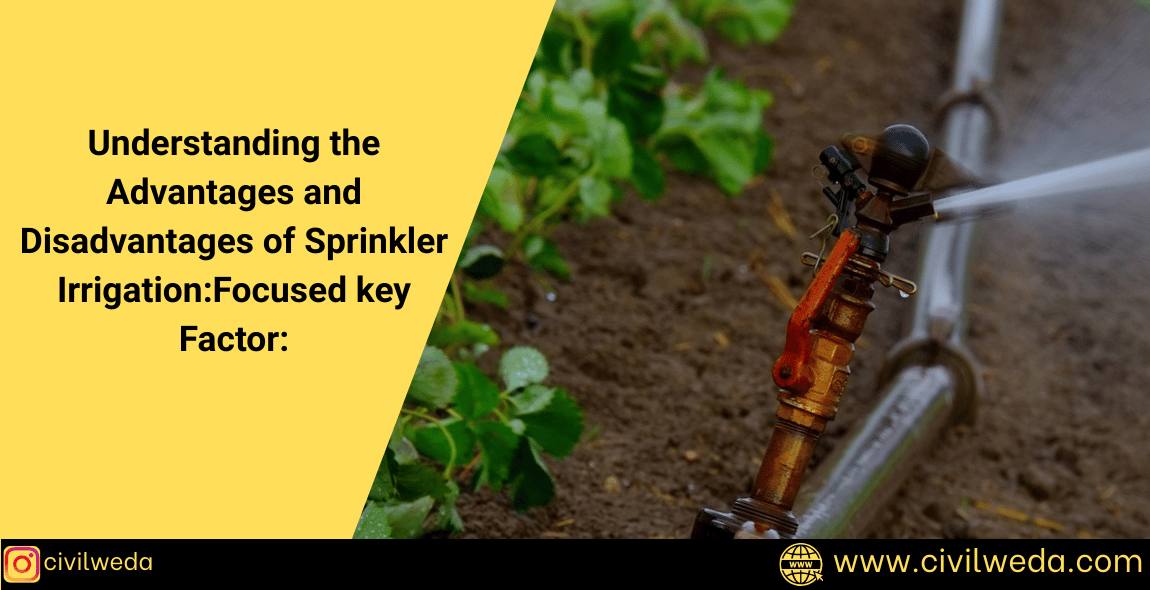
Introduction
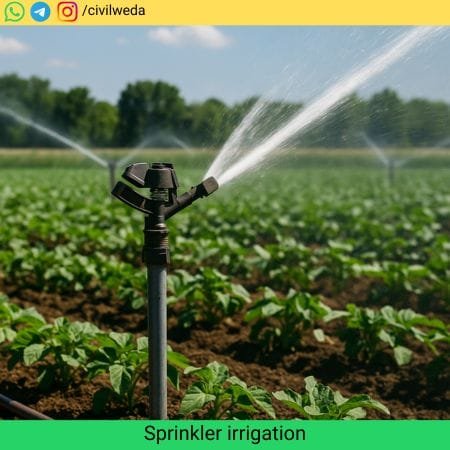
Sprinkler irrigation is a modern irrigation method that sprays water over crops just like natural rainfall. It ensures uniform water distribution, saves water, reduces soil erosion, and helps in producing healthier crops. Because of these benefits, it has become one of the most popular irrigation techniques in agriculture.
Apart from sprinkler irrigation, another widely used modern method is drip irrigation, which delivers water directly to the plant roots and ensures higher water-use efficiency
However, like every method, sprinkler irrigation also has some drawbacks that farmers should be aware of. High installation costs, maintenance needs, and power requirements are a few of them.
In this article, we will explore the advantages and disadvantages of sprinkler irrigation systems, their cost-effectiveness, and how they impact crop yield and the revenue of farmers.
What is Sprinkler Irrigation?
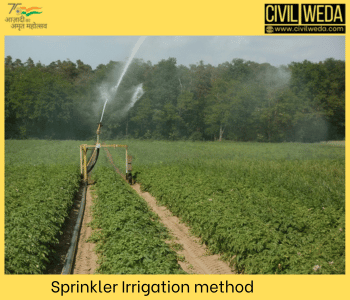
Sprinkler irrigation is a modern method of supplying water to crops in the form of artificial rainfall. In this system, water is pumped through pipes and sprayed into the air through sprinklers. The sprinklers break the water into small drops and spread it evenly across the field, just like natural rain.
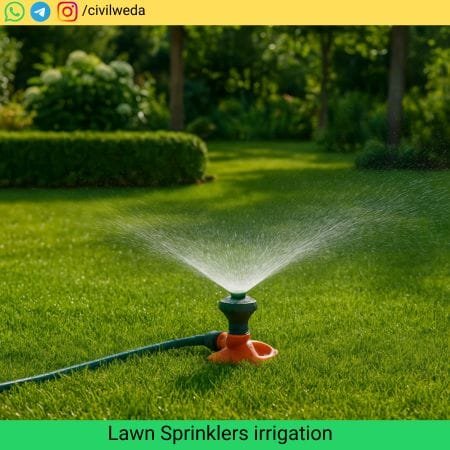
This method is not limited to agriculture. It is also widely used in garden irrigation systems, lawn sprinklers, and sprinkler system installations for parks, lawns, and landscapes. The system works well on different soils and crops and helps in saving water and improving crop quality.
Many farmers and homeowners rely on trusted sprinkler companies to install efficient sprinkler irrigation systems. Though the initial cost is high, it reduces water wastage, lowers labor costs, and increases crop yield. In the long run, it improves profitability and boosts farm revenue.
Because of its similarity with rainfall, sprinkler irrigation is also called the overhead irrigation method.
Advantages of Sprinkler Irrigation
- Even Watering
Sprinklers spread water like rain, so all plants get the same amount. This helps crops grow better. - Saves Water
It uses much less water than flood irrigation. Good for areas where water is limited. - Works on Many Soils
It can be used on sandy, loamy, or medium soils without problems. - Easy Fertilizer Use
Fertilizers can be mixed with water and sprayed with sprinklers. This saves time and makes crops healthier. - Less Labor Needed
After installation, the system works on its own. Farmers save money and effort. - Protects Soil
Gentle spraying reduces soil erosion and prevents waterlogging. - Used in Many Places
Works for farms, gardens, lawns, and parks. That makes it useful for both farming and landscaping. - Better Income
Saves water, cuts costs, and improves yield. This increases farm profit and revenue over time.
Disadvantages of Sprinkler Irrigation
- High Initial Cost
Setting up a sprinkler irrigation system is expensive compared to traditional methods. Pipes, pumps, and sprinklers require a good investment. - Power Requirement
Sprinklers need a continuous power supply or pumps to work. In areas with poor electricity, this becomes a problem. - Water Loss
In hot and windy weather, water evaporates or drifts away, leading to wastage. - Not Suitable for All Crops
Crops that are sensitive to wet leaves, such as groundnut or chili, may be affected by this method. - Maintenance Needed
Sprinkler nozzles can get blocked by sand, mud, or salt. Regular cleaning and repair are required. - Less Effective in Windy Areas
Strong winds disturb the water spray, so the distribution becomes uneven. - High Operating Cost in Some Cases
If farmers use costly pumps or branded equipment from sprinkler companies, operating costs may be higher. But reliable systems last longer and give better results.
Read more Civil Engg Topics
- Advantages and Disadvantages of Sprinkler Irrigation
- Drip Irrigation
- Waterlogging
- Viscosity
- Surface Tension
Conclusion
A sprinkler irrigation system is one of the most popular modern irrigation methods because it saves water, reduces labor, and improves crop yield. It works well for different soils and is also useful in gardens, lawns, and parks. At the same time, farmers must consider its high setup cost, power requirement, and regular maintenance needs.
By understanding both the advantages and disadvantages of sprinkler irrigation, farmers can choose the right method for their field conditions and achieve better productivity. In the long run, it can increase productivity and help improve farm revenue.
To learn about another efficient irrigation method, read our complete guide on Drip Irrigation.
FAQs on Sprinkler Irrigation
1. What is sprinkler irrigation?
Sprinkler irrigation is a method of watering crops where water is sprayed through pipes and nozzles, just like rainfall. It helps save water and improve crop growth.
2. What are the main advantages of sprinkler irrigation?
It saves water, reduces soil erosion, applies fertilizers easily, and provides uniform water distribution. It also cuts down labor costs.
3. What are the disadvantages of sprinkler irrigation?
The system has a high initial cost, needs continuous power, and requires regular maintenance. It also causes water loss in hot and windy conditions.
4. Is sprinkler irrigation suitable for all crops?
No, it is not suitable for crops that are sensitive to leaf wetting, such as groundnut, chili, and potato.
5. How does sprinkler irrigation affect farm revenue?
Though the installation cost is high, it increases crop yield, reduces water and labor costs, and helps farmers earn better income in the long run.
Thank You for Reading! 🙏
We hope this article helped you clearly understand sprinkler irrigation in civil engineering. If you found this complete article useful, please share it with your friends and university students. For more informative posts on civil engineering topics, stay connected with Civil Weda. 🚀.