Introduction
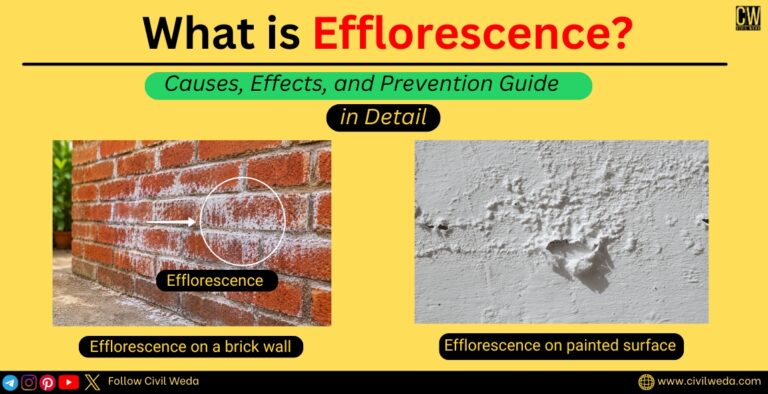
Have you ever noticed a white, powdery substance on the surface of a brick wall, concrete floor, or plastered surface? Many people mistake it for dust or paint damage, but it is actually efflorescence. This is one of the most common issues found in buildings, especially in areas where moisture is present.
Although it does not usually weaken the structural strength of a building, it affects the appearance of walls and may indicate that moisture is entering the structure. If ignored for a long time, the continuous presence of moisture can lead to more serious problems, such as dampness, paint peeling, mould growth, and deterioration of building materials.
Understanding why efflorescence occurs and how to prevent it is essential for civil engineers, contractors, students, and homeowners. Proper construction practices and moisture control can significantly reduce the chances of efflorescence.
In this article, we will learn what efflorescence is, how it forms, its causes, effects, prevention methods, and the best techniques to remove it.
What is Efflorescence?
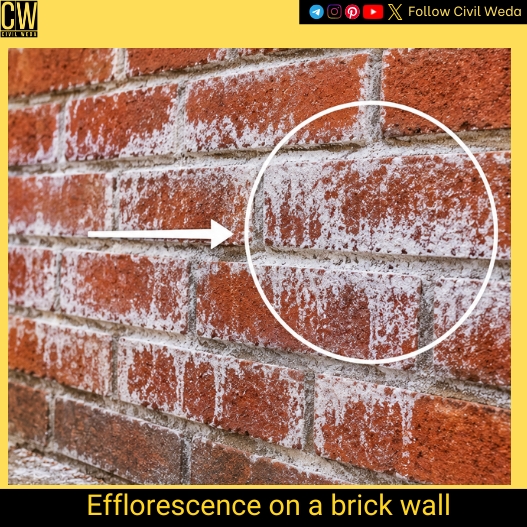
Efflorescence is the white or greyish crystalline deposit that appears on the surface of porous building materials such as bricks, concrete, cement plaster, mortar, stone, and masonry walls.
It is formed when water containing dissolved soluble salts moves through these materials and reaches the surface. As the water evaporates, the salts remain behind, creating a powdery or crystal-like layer.
The process itself is completely natural and depends on three conditions:
- Presence of soluble salts inside the building material
- Availability of moisture or water
- A path that allows water to move to the surface
If any one of these three conditions is absent, it cannot develop.
It is primarily an aesthetic issue, as it creates unsightly white stains on walls and floors. However, repeated efflorescence often indicates excessive moisture movement inside the building, which should be investigated and corrected.
Let’s understand with an Example:
Suppose rainwater enters a brick wall. The water dissolves naturally occurring salts present in the bricks and mortar. As the water slowly travels toward the outer surface and evaporates, the dissolved salts remain behind as a white deposit. This white deposit, as shown in the figure, is known as efflorescence.
Read our Other Post
Classification of Efflorescence as per IS:3495 (Part 3)
According to IS 3495 (Part 3), Efflorescence in bricks is classified into five categories based on the amount of salt deposits visible on the exposed surface of the brick.
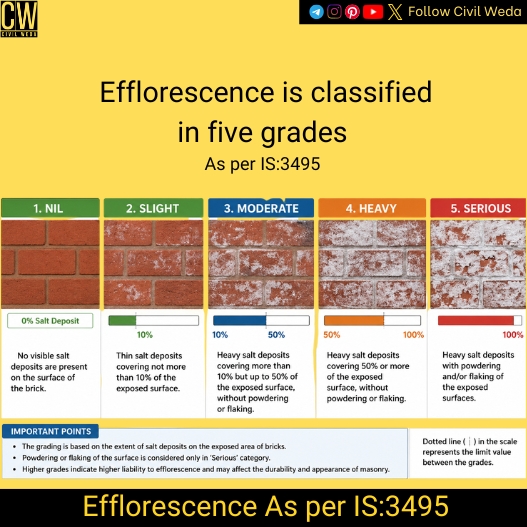
Nil
No visible salt deposits are present on the surface of the brick. The brick is considered free from efflorescence.
Slight
A thin layer of white salt deposits covers not more than 10% of the exposed surface of the brick.
Moderate
The salt deposits are heavier than in the slight category and cover more than 10% but up to 50% of the exposed surface. However, the brick surface does not show any powdering or flaking.
Heavy
A thick deposit of salts covers 50% or more of the exposed surface of the brick. Even though the salt deposits are heavy, the surface still does not show powdering or flaking.
Serious
A heavy salt deposit is present on the brick surface, and it is accompanied by powdering, flaking, or both. This is the most severe form of efflorescence and indicates significant deterioration of the brick surface.
Causes of Efflorescence
It commonly does not appear randomly. It develops only when certain conditions exist together. Understanding these causes helps engineers, builders, and homeowners prevent the problem before it becomes visible. Some of the important causes for it are given below
Presence of Soluble Salts
The primary cause of efflorescence is the presence of water-soluble salts in construction materials. These salts may naturally exist in bricks, cement, sand, mortar, concrete, or even groundwater. Some of the common soluble salts are: Sodium sulfate, Potassium sulfate, Calcium sulfate, Magnesium sulfate, Sodium carbonate, Calcium carbonate.
When these salts come into contact with water, they dissolve easily and move through the pores of the building material like bricks, stone or aggregates.
Presence of Moisture or Water Content
Water is the main driving force behind it. Without moisture, soluble salts cannot dissolve or travel to the surface. Even a small amount of repeated moisture can trigger efflorescence if soluble salts are present. Water can enter a building through several sources, including:
- Rainwater penetration
- Groundwater rising through capillary action
- Construction water that has not completely dried
- Water leakage from plumbing pipes
- Roof leakage
- Poor drainage around the building
- High humidity or condensation
Porous Building Materials
Building materials such as bricks, concrete, mortar, stone, and plaster contain tiny interconnected pores. These pores allow water to move from one location to another. The higher the porosity of a material, the easier it becomes for salt-containing water to travel to the surface. This is why efflorescence is more common on porous masonry than on dense, low-absorption materials.
Evaporation of Water
After salt-containing water reaches the surface, it begins to evaporate due to sunlight, wind, or warm temperatures. As the water disappears, the dissolved salts remain behind and crystallise on the surface. These crystals appear as a white powdery deposit, which is known as efflorescence.
Effects of Efflorescence
The following are the major effects of efflorescence on buildings and construction materials.
Reduces the Aesthetic Appearance
The most noticeable effect of efflorescence is the formation of white, powdery deposits on walls, bricks, concrete, tiles, and stone surfaces. These stains make the surface look old, dirty, and poorly maintained. In residential and commercial buildings, this can reduce the overall visual appeal of the property.
Indicates Moisture Problems
Efflorescence itself is not the main problem. Instead, it acts as a warning sign that moisture is moving through the building material. Identifying and eliminating the moisture source is essential to prevent repeated efflorescence.
Causes of Paint and Coating Failure
When salts accumulate beneath a painted or coated surface, they create pressure as they crystallise. This pressure may cause: Paint peeling, Blistering, Flaking, Loss of adhesion, Uneven surface finish. As a result, walls often require repainting after the moisture issue has been corrected.
Leads to Dampness
Continuous moisture movement through walls can create damp conditions inside the building. Persistent dampness may result in: Unpleasant odor, Discolouration of walls, Mould and mildew growth, Damage to interior finishes, and reduced indoor comfort
Deterioration of Building Materials Over Time
Repeated cycles of wetting, salt crystallisation, and drying can gradually damage porous materials. In severe cases, prolonged exposure may contribute to: Surface scaling, Minor cracking, Loss of mortar from joints, Gradual deterioration of bricks and plaster
Although efflorescence itself does not usually reduce structural strength, the associated moisture can accelerate the deterioration of building components.
Increases Maintenance Costs
Buildings affected by recurring efflorescence. It often requires: Frequent cleaning, Repainting, Waterproofing repairs, Crack sealing, and Moisture control. As a result, the overall maintenance cost of the building increases significantly. If you ignoring this problem at an early stage may lead to higher maintenance expenses in the future.
It May Reduce Your Property Value
Visible white stains and moisture-related damage can create a negative impression during property inspections. Potential buyers or tenants may assume that the building has water leakage or maintenance issues, which can reduce its market value.
Is Efflorescence Dangerous?
In the most cases, efflorescence is not structurally dangerous. The white salt deposits themselves do not significantly reduce the strength of concrete or brick masonry. However, the moisture responsible for efflorescence should never be ignored. If water continues to enter the building, it can eventually lead to problems such as damp walls, corrosion of reinforcement in reinforced concrete, deterioration of finishes, and higher repair costs.
How to Prevent Efflorescence
Preventing efflorescence is always better than removing it after it appears. Since moisture is the main factor responsible for carrying soluble salts to the surface, the best prevention strategy is to control water penetration and use quality construction materials. The following methods can significantly reduce the risk of efflorescence in buildings.
Use High-Quality Construction Materials
Choose good-quality bricks, cement, sand, aggregates, and mortar with low soluble salt content. Poor-quality materials often contain higher amounts of salts, increasing the possibility of efflorescence. Whenever possible, purchase construction materials from reliable manufacturers and store them in a dry location before use.
Use Clean Water for Construction
This is the most important factor for efflorescence; water used for mixing concrete, mortar, and curing should be clean and free from harmful salts. Saline or contaminated water introduces additional soluble salts into the building materials, increasing the likelihood of future efflorescence. So, use clean water for making concrete.
Ensure Proper Waterproofing
Preventing water from entering the structure is one of the most effective ways to control efflorescence. Proper waterproofing should be provided for: Roofs, Basements, External walls, Bathrooms, Water tanks, and balconies. A well-designed waterproofing system minimises moisture penetration and extends the service life of the building.
Install an Effective Damp-Proof Course (DPC)
Groundwater can rise through masonry by capillary action if there is no proper damp-proof course. So, providing a correctly installed DPC at the plinth level prevents moisture from moving upward into walls and significantly reduces the chances of efflorescence.
Seal Cracks and Joints
Small cracks in walls, roofs, and masonry provide easy paths for water penetration. Regular inspection and timely sealing of cracks, construction joints, and pipe openings help prevent moisture from entering the building surface.
Allow Building Materials to Dry Properly
Newly constructed walls often contain a considerable amount of construction moisture. Painting or applying decorative coatings before the walls have completely dried can trap moisture inside, increasing the possibility of efflorescence. Always allow sufficient drying time before finishing work begins.
Apply Water-Repellent Sealers
Suitable breathable water-repellent sealers, such as Silicone-based sealers, Silane sealers, Siloxane sealers, Acrylic water repellents, can reduce rainwater absorption while still allowing moisture vapour to escape. These coatings help protect exterior masonry without trapping moisture inside the wall.
How to Remove Efflorescence
If it has already appeared, it should be removed carefully by dry brushing, water washing, or mild cleaning solutions. More importantly, the source of moisture must be eliminated; otherwise, the deposits will return on the surface.
Read more Civil Engg Topics
- Capillary action
- Timber
- Chlorination of water
- Seasoning of Timber
- Difference between Tar and Bitumen
- Types of soil
- Atterberg Limits
- Compass Survey
- Factors affecting per capita demand
- Drip Irrigation
- Pile Foundation
Conclusion
Efflorescence is one of the most common moisture-related problems in buildings. Although it usually appears as a harmless white powder on the surface, it should never be ignored because it often indicates unwanted moisture movement within the structure.
The formation of efflorescence depends on three essential factors: soluble salts, moisture, and evaporation. By understanding how these factors interact, engineers, contractors, and homeowners can take effective steps to prevent the problem before it becomes serious.
Using quality construction materials, controlling water penetration, providing proper waterproofing, and maintaining good drainage are the most effective ways to reduce the risk of efflorescence. If it does appear, cleaning the surface alone is not enough—the actual source of moisture must also be identified and corrected.
With proper construction practices and regular maintenance, buildings can remain free from recurring efflorescence, ensuring better durability, appearance, and long-term performance.
How can efflorescence be prevented?
Efflorescence can be prevented by using high-quality construction materials, clean water, proper waterproofing, an effective damp-proof course (DPC), good drainage, and breathable water-repellent sealers. Controlling moisture is the most effective prevention method.
What causes efflorescence?
Efflorescence is mainly caused by the combination of three factors: soluble salts, moisture, and evaporation. When water dissolves salts inside a porous material and later evaporates, white salt deposits appear on the surface.
Which IS code is used for the efflorescence test of bricks?
The efflorescence test for burnt clay building bricks is specified in IS 3495 (Part 3). The standard classifies efflorescence into Nil, Slight, Moderate, Heavy, and Serious categories based on the amount of salt deposits on the brick surface.
Thank You for Reading! 🙏
We hope this article helped you clearly understand efflorescence in civil engineering. If you found this complete article useful, please share it with your friends and university students. For more informative posts on civil engineering, stay connected with Civil Weda. 🚀